Category: Uncategorised

  • Methods of iterating

    Tool / Medium

    TouchDesigner

    Process

    I chose TouchDesigner because Ihave always been interested inmotion graphics, but I had very littleexperience with this type ofsoftware. I wanted to explore how Icould use it to create movingimages and experiment withtypography beyond traditionalgraphic design.

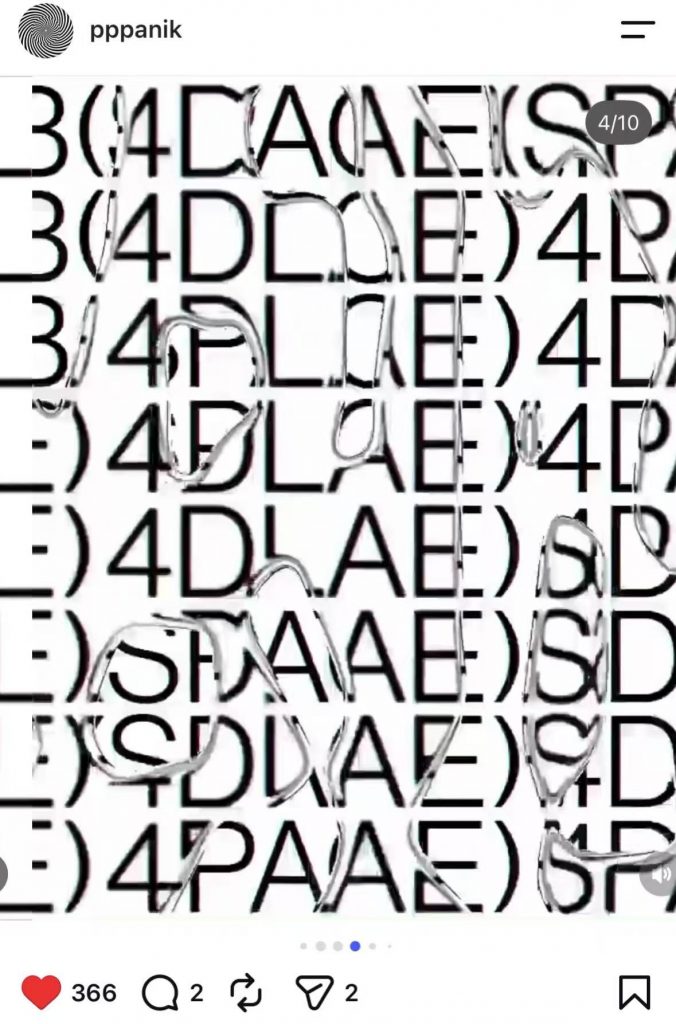
    The reference work is a kinetictypography piece by pppanik onInstagram. I was particularlyinterested in how the letters aredistorted, stretched and transformedinto moving visual patterns. Thecombination of typography,movement and distortion creates avisual effect that feels very differentfrom static graphic design.
    As I had almost no experience with TouchDesigner, I initially thought this effect would be relatively simple to recreate. I wanted to use thisproject as a starting point to learnthe basic functions of the softwareand understand how its nodesystem could be used to createdynamic visual effects.
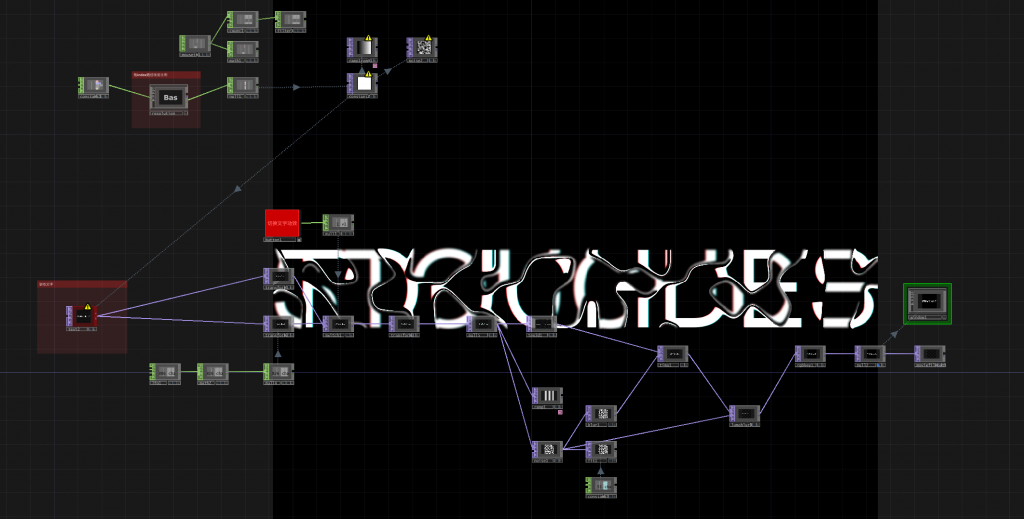
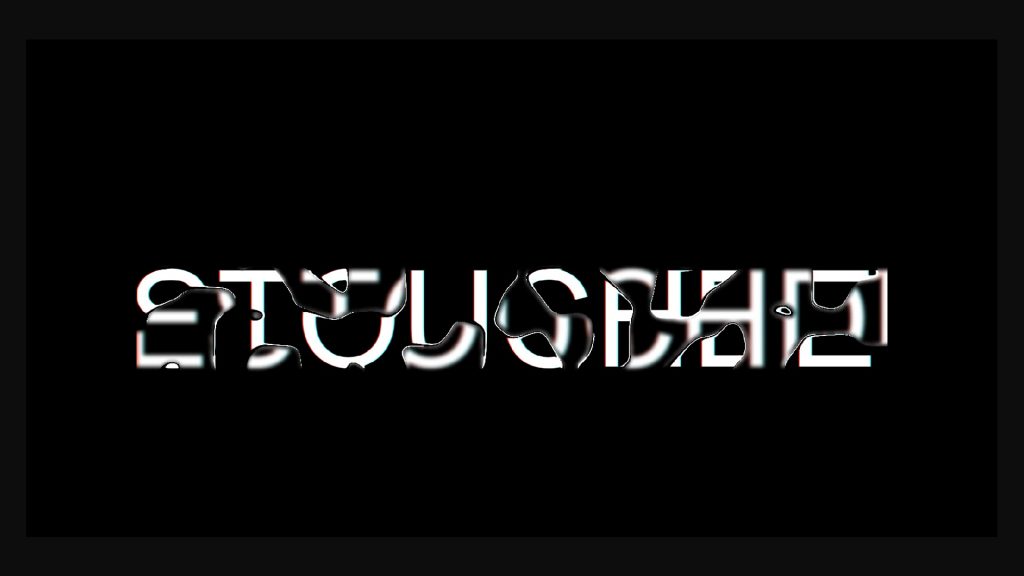
    I followed a YouTube tutorial to learn the basic workflow in TouchDesigner. I builtthe node network step by step, then adjusted some parameters and modified partsof the effect to get closer to the original work.

    I connected the basicnodes and built a systemto control the visual effect.
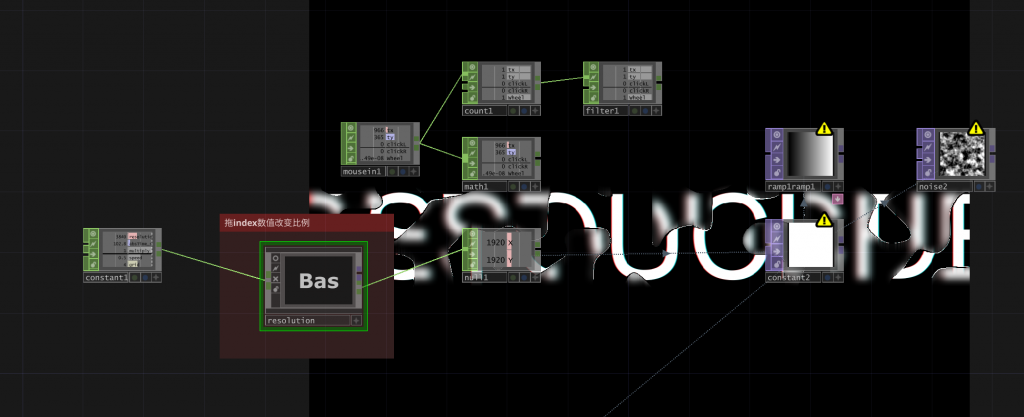
    I adjusted the text andparameters to explore different forms ofdistortion.
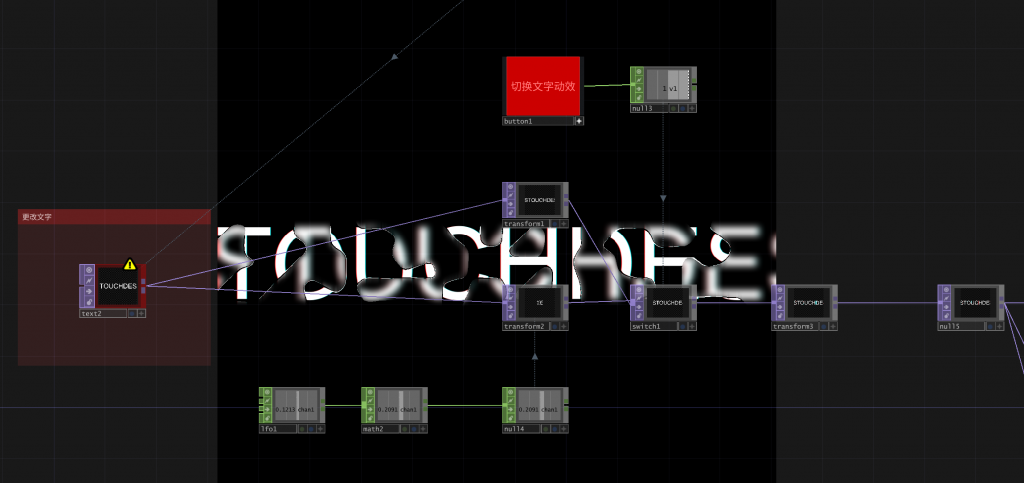
    I combined visual effectssuch as noise and blur tocreate the final distortion.
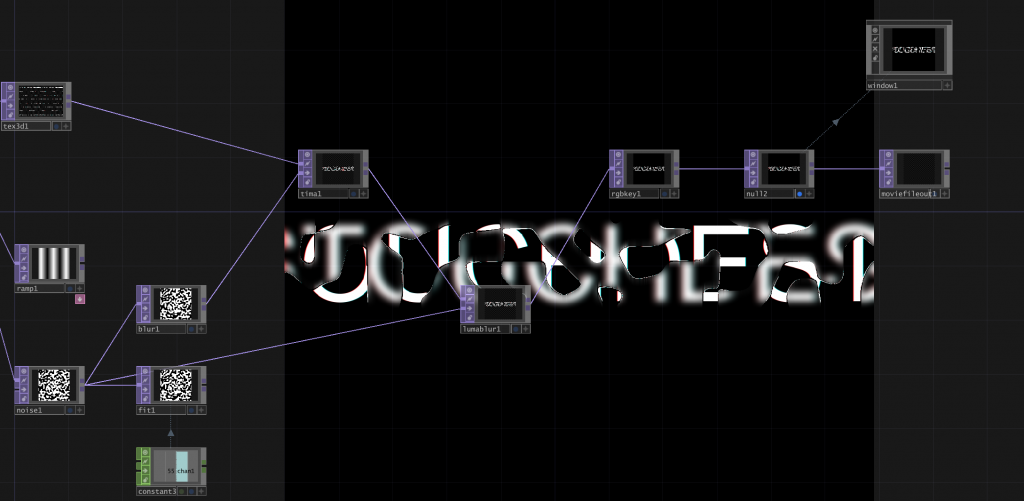
    my imitation:
    Question

    How does typographic distortionaffect readability?


    How does typographic distortionaffect readability?


    Does Touch designer prompt designers to shift from being’creators of graphic output’ to’editors of uncontrollable graphic design?

    Experiment 1


    How does typographic distortion affect readability?


    Controlling Typographic Distortion


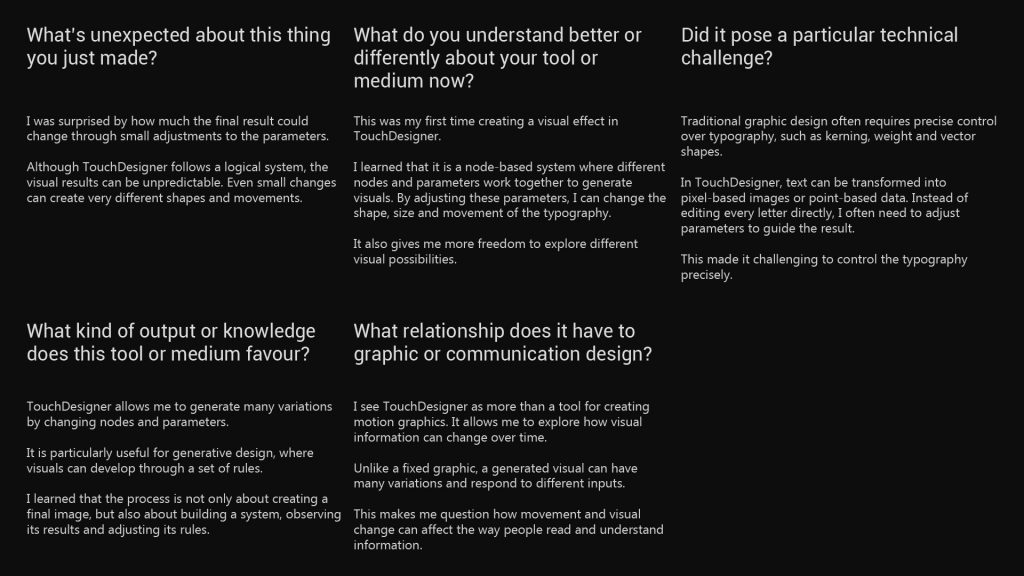
    How does changing the parameters of a generative system affecttypographic readability and visual unpredictability?

    Group 1
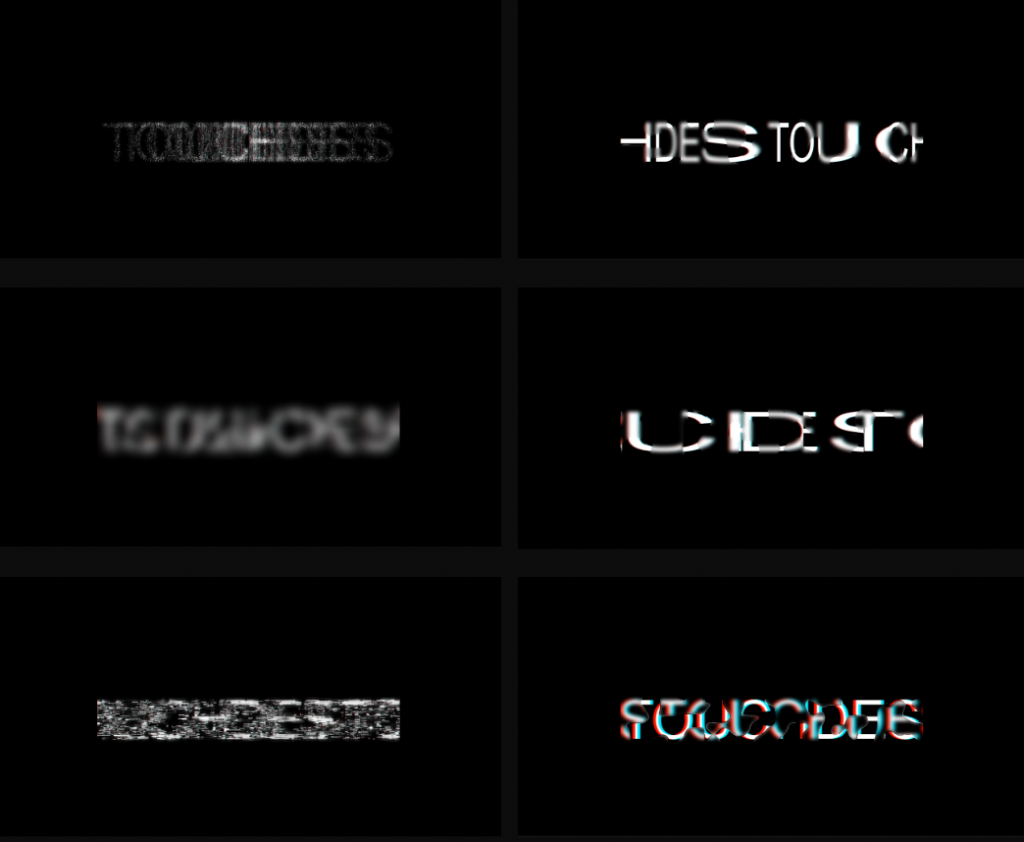
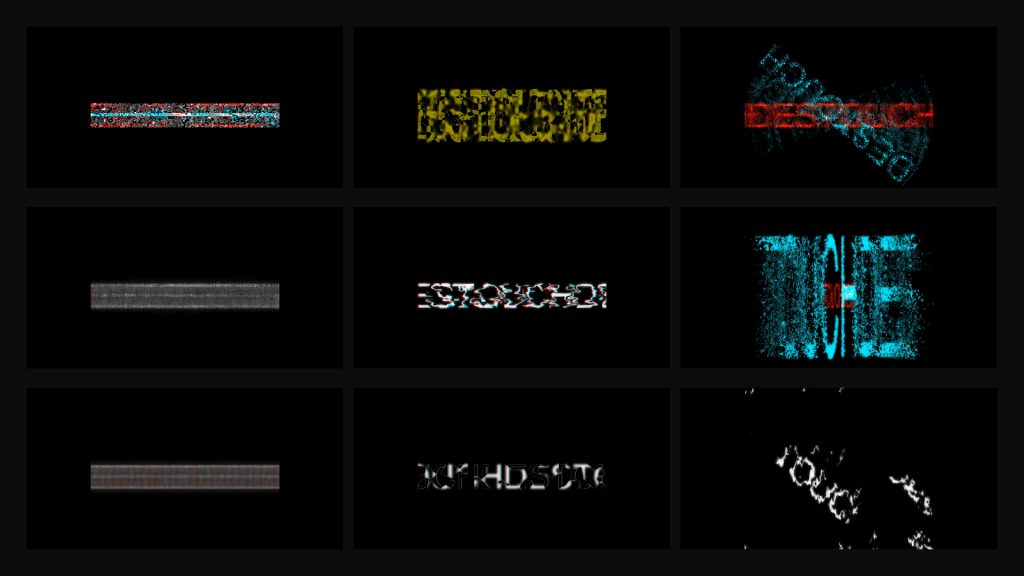
    I changed one parameter in a singlenode while keeping the othersettings the same. This helped meobserve how one specific parameteraffects the distortion of the text andunderstand its role in the visualresult.
    Group 2
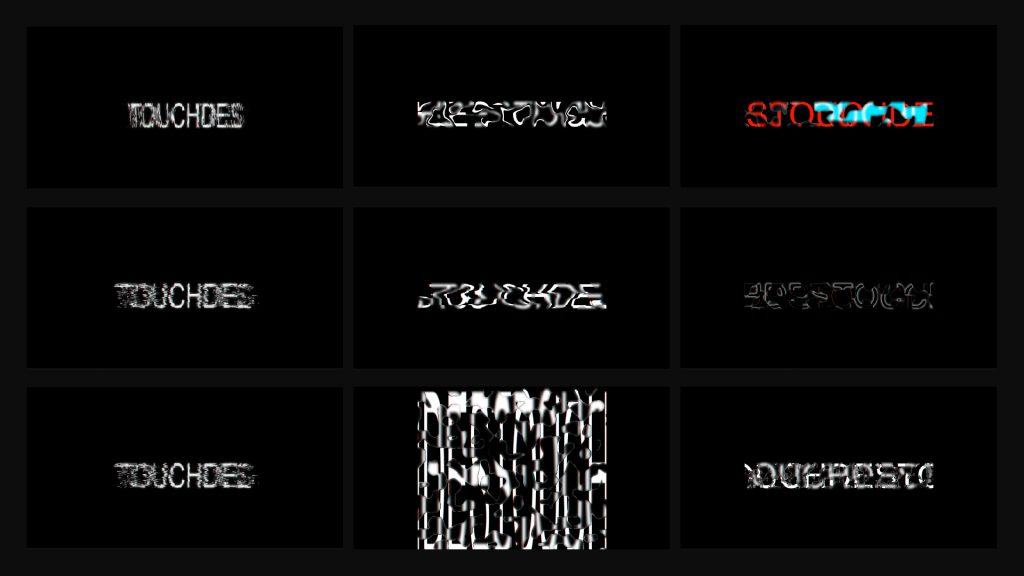
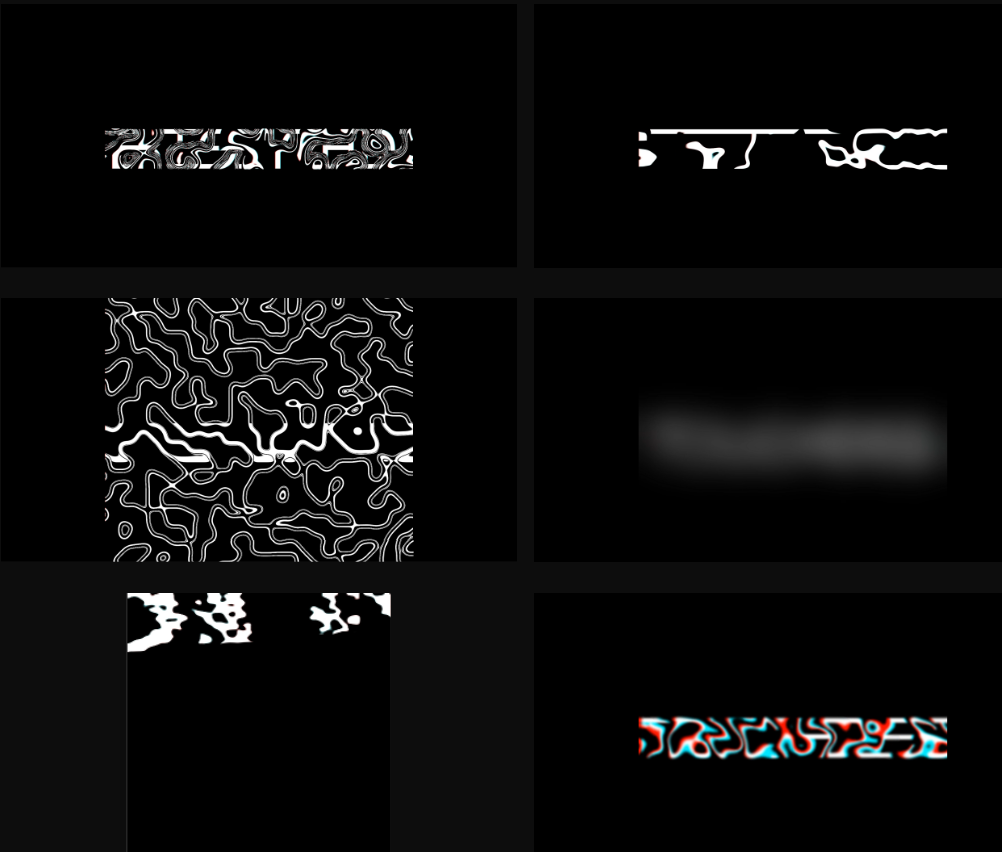
    I experimented with multipleparameters across different nodesto explore how their effects interact.Compared with the first group, theresults were less predictable,helping me investigate the balancebetween control and unpredictabilityin TouchDesigner.
    Reflection

    Through these experiments, I found that changing even one parameter could produce very different typographicresults. When I changed multiple parameters acrossdifferent nodes, the outcomes became more complexand less predictable.

    I also found that typographic distortion could affectreadability. The text could become almost impossible torecognise, or remain partly readable. This made merealise that small changes in parameters can have asignificant impact on how typography communicates.

    Through this process, I began to understand thatgenerative design is not only about controlling the finalimage, but also about exploring and responding to unexpected results.

    In the next stage, I want to explore how I can balancevisual unpredictability with readability, and how much control a designer really needs over a generativesystem.

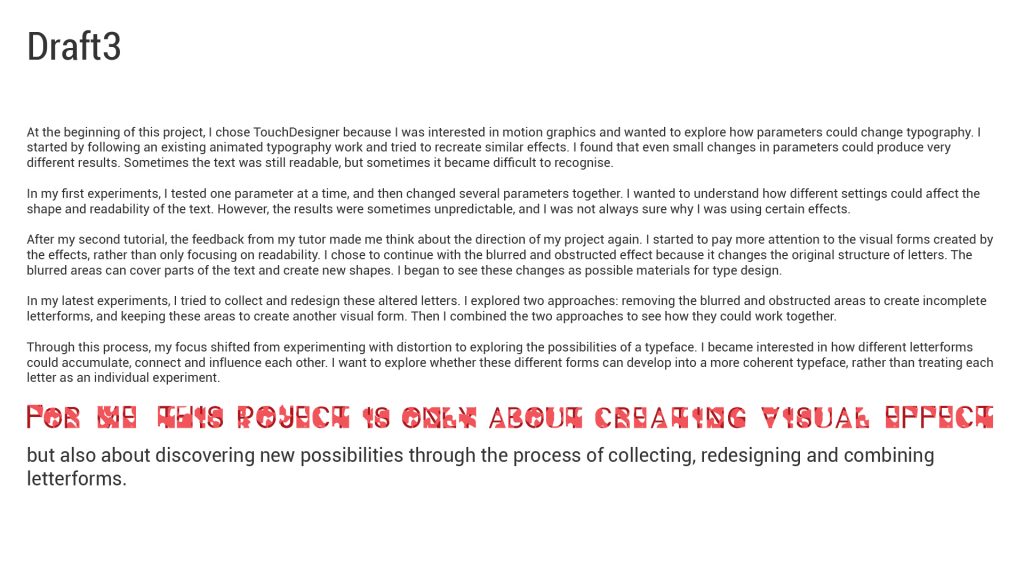
    I chose this effect because it changes both the shapeand readability of the text. The blurred and obstructed areas create new forms within the original letters. This made me think about using TouchDesigner as astarting point to collect these altered letter forms and redesign them into a typeface.
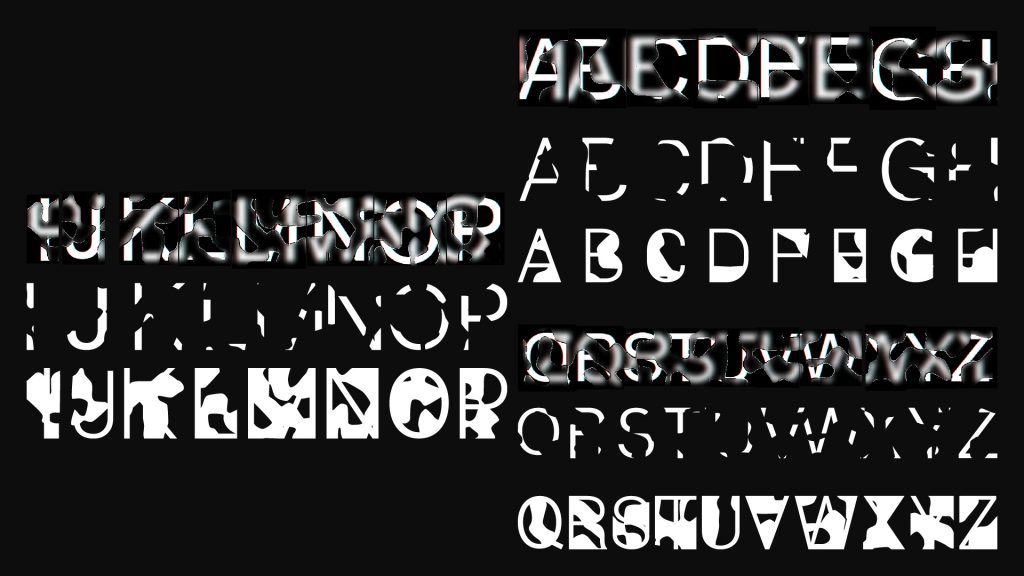
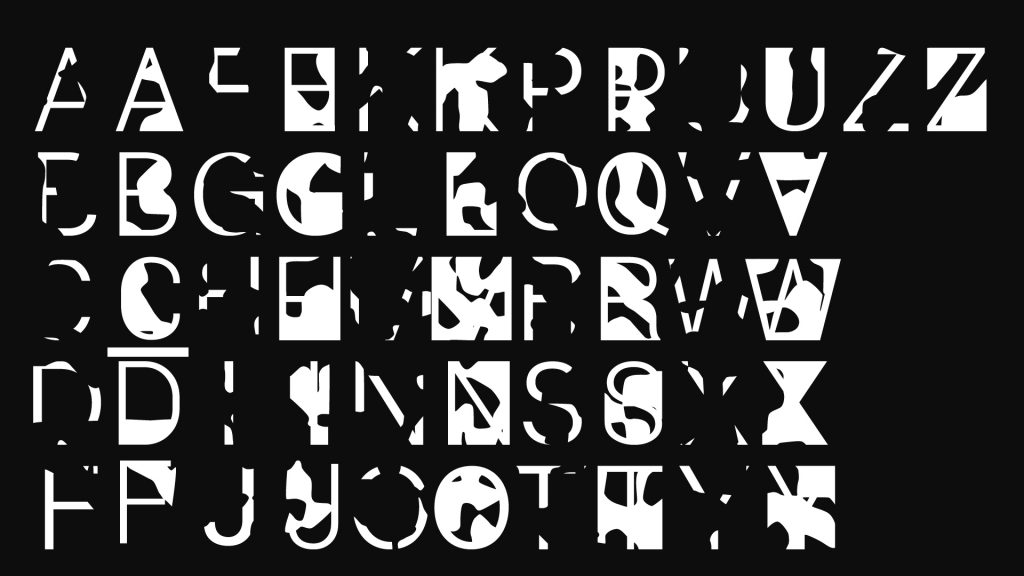
    I explored two waysof developing theletterforms. Iremoved the blurredand obstructedareas to createincomplete forms,and then kept theseareas to exploreanother visualdirection. These two approaches allowedme to see how thesame effect couldproduce different letter form structures.

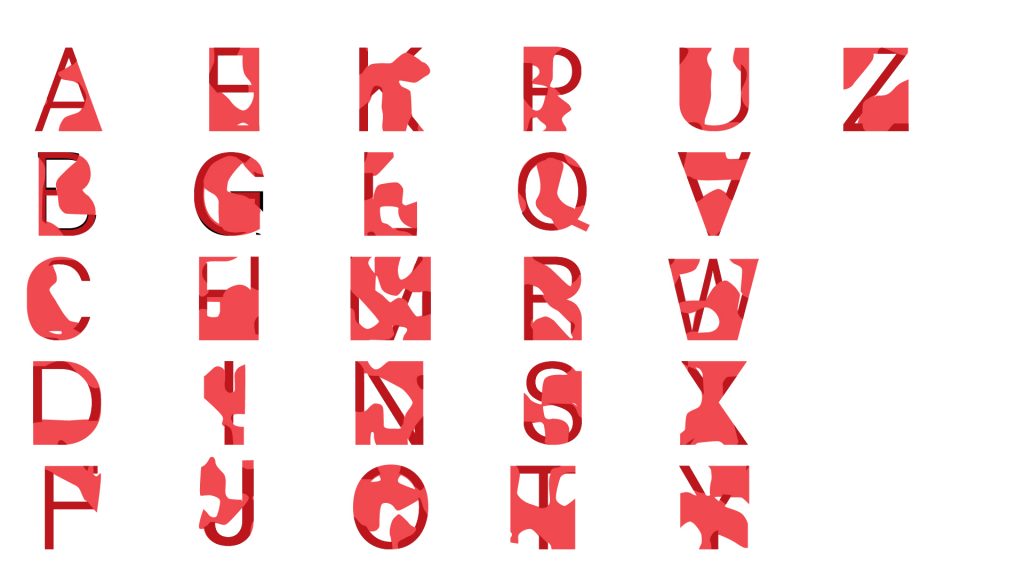
    I then combined the two approaches to explore how these different forms could work together. Rather than treating each letter as an individual experiment, I started to consider how the letterforms could accumulate, connect and influence each other. This led me to explore the possibilities of developing a typeface through the combination of different forms.
  • Methods of investigation

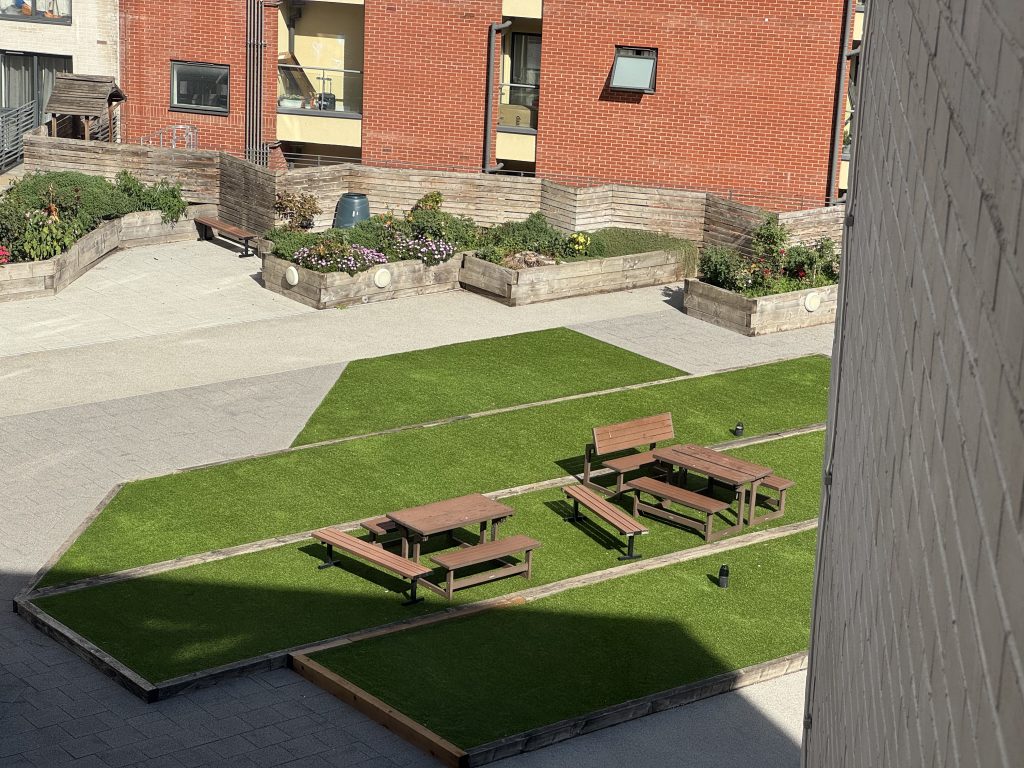
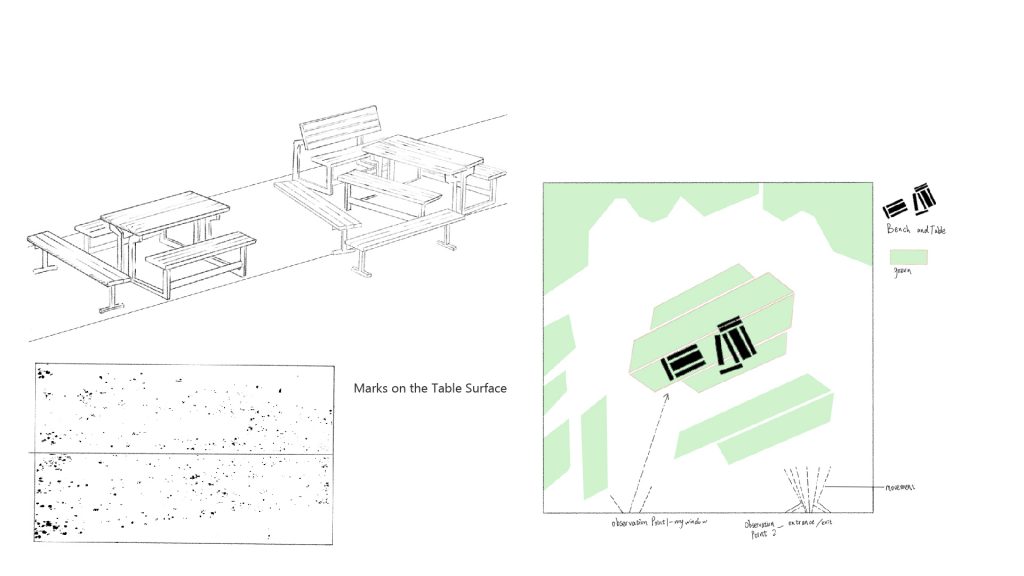
    My site is a small communal outdoor seating area in my student accommodation. It consists of three benches and a shared table, located directly below my apartment window.

    I chose this site because I can observe it repeatedly from my window, while also accessing it directly. This allows me to observe the same space from different distances and at different times.

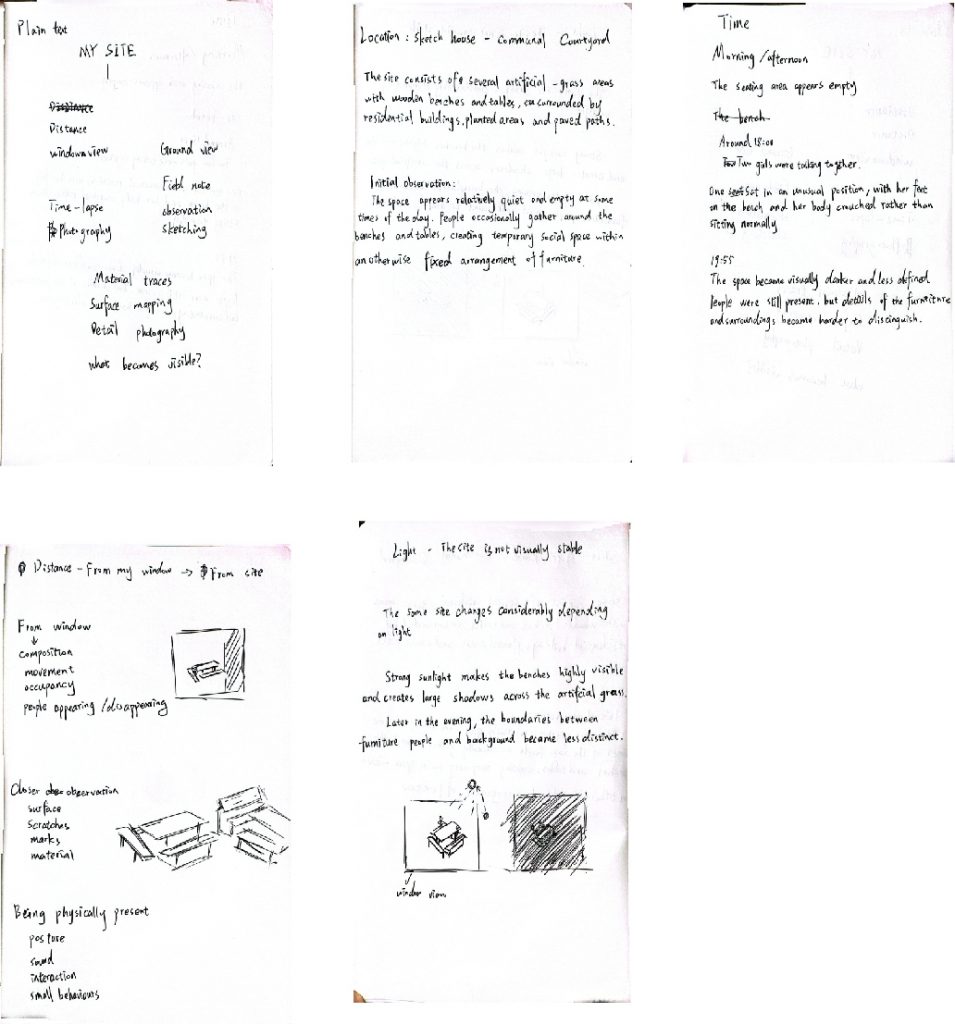
    1.Method-NOTE

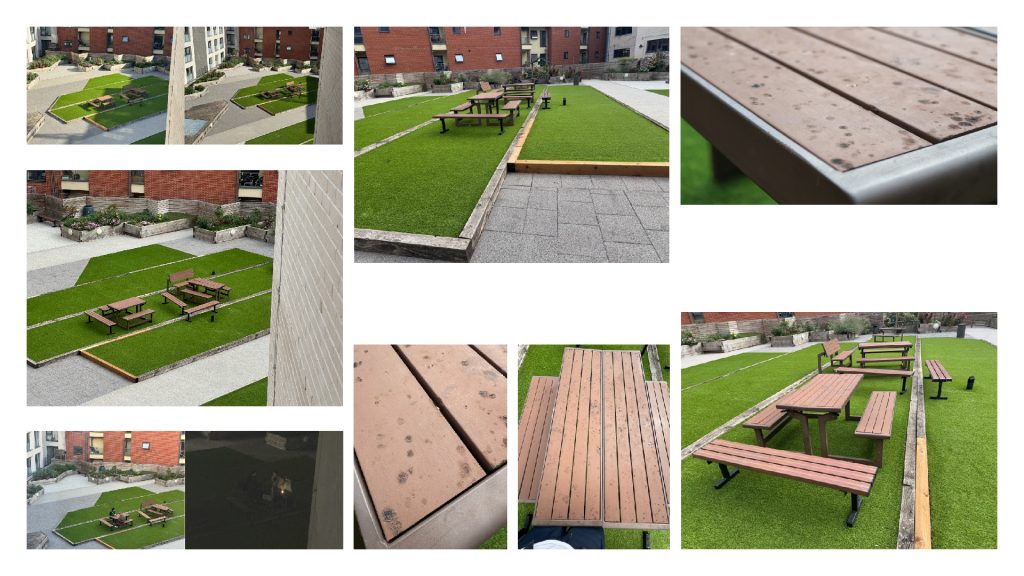
    2.Method-Photography

    I photographed the site from different distances and at different times, including views from my apartment window and closer observations on site.

    What I noticed

    From a distance: the site is mainly read through its overall arrangement, movement and occupancy.
    At close range: surface details, marks and material changes become visible.

    3.Method-Sketching, Mapping

    translated the site from photographs and direct observation into drawings and diagrams. Drawing allowed me to focus on the structure of the furniture, while mapping allowed me to record relationships, traces and movement within the site.

    The furniture creates a fixed spatial structure, but people’s movement and use of the space are temporary and changeable.

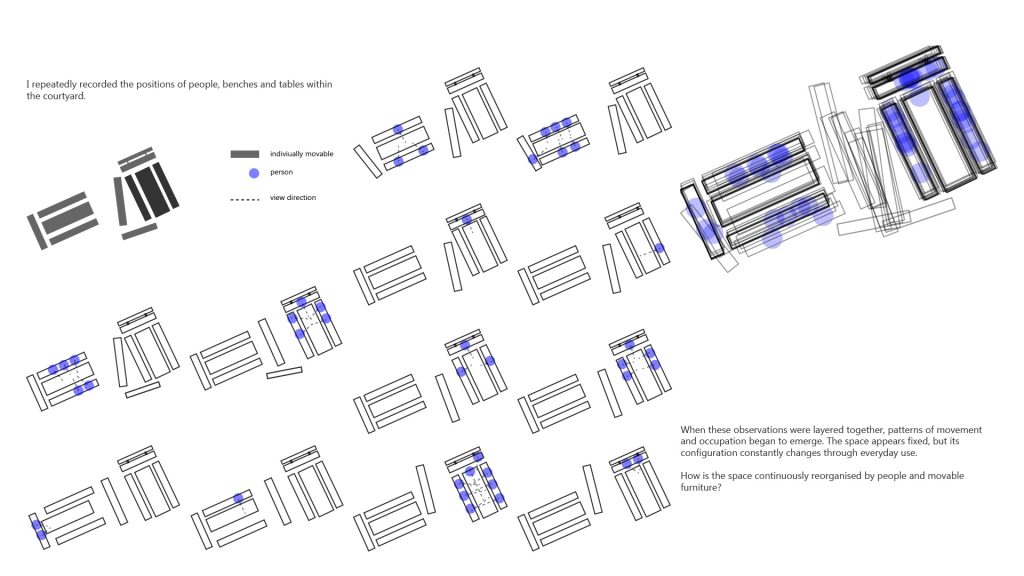
    Following the feedback, I documented changes in people’s positions and movements, as well as the repositioning of the benches. By overlaying these records, I made the dynamic traces of activity more visible (top-right image).

    Although the marks on the table created a strong visual impact, I realised that they did not contribute meaningfully to my research findings. I therefore decided to exclude them from further observation and focus on the interactions between people and the movement of the benches.

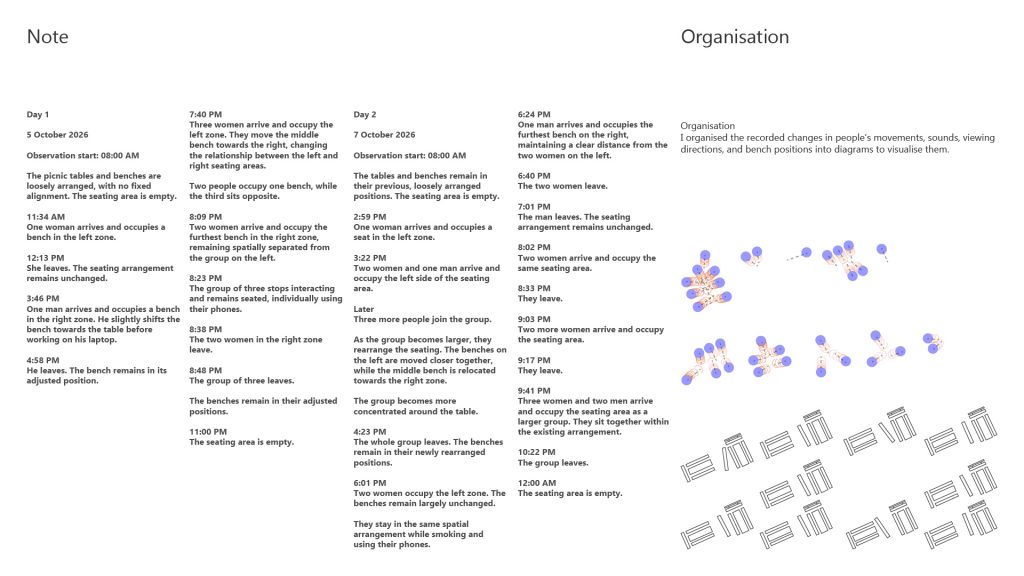
    Organisation

    Following the feedback, I focused on the relationship between time and spatial change. I recorded people’s activities and movements alongside changes in bench positions, organising the observations into diagrams to reveal patterns of movement and spatial reorganisation.

    Through Methods of Investigation, I learned that observation is not simply about collecting information, but about identifying meaningful relationships and translating them into visual forms. I also learned to reconsider which details were relevant to my research and refine my methods accordingly.

    Brief

    During this project, I chose the communal seating area at Sketch House as my observation site. At first, I was interested in the marks on the table and the general arrangement of the benches. I thought these small details might tell me something about how people used the space. However, as I continued observing, I realised that some visually interesting details did not necessarily help me understand the space better.

    The feedback from my tutor and classmates encouraged me to look more closely at the relationship between people and their surroundings. I began to record people’s movements, sitting positions, interactions and the changing positions of the benches at different times. I also compared my observations from two different days and combined the recorded positions into diagrams. This helped me notice that the benches were not always fixed in place. When more people arrived, they sometimes moved the benches closer together to create a shared space. When people came alone, they tended to occupy separate areas.

    One of the most interesting things I discovered was that the same space could be used in very different ways throughout the day. Its arrangement was not simply determined by the furniture itself, but also by people’s activities and social relationships. This made me realise that space is more flexible and dynamic than I had initially thought.

    Through Methods of Investigation, I learned that observation is not just about collecting as much information as possible. It is also about deciding what is worth observing, questioning my initial assumptions and finding relationships within the information I collect. Feedback helped me change my direction and focus on more meaningful details.

  • Hello world!

    Welcome to myblog.arts. This is your first post. Edit or delete it, then start blogging!